John Steiner

- Psychic Retreats: Pathological Organizations in Psychotic, Neurotic and Borderline Patients (1993)
- Seeing and Being Seen: Emerging from Psychic Retreat (2011)
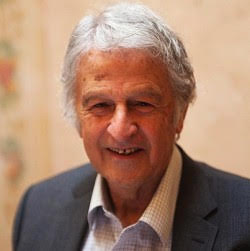
John Steiner (1934–2022) was a British psychoanalyst renowned for his significant contributions to Kleinian psychoanalysis, particularly his work on psychic retreats, pathological organizations, and the treatment of borderline and narcissistic personality disorders.[1] His theoretical and clinical insights have had a lasting impact on the understanding and treatment of patients with severe personality disturbances.
Biography
John Steiner's career was deeply rooted in the British psychoanalytic tradition, particularly the Kleinian school. His work built upon and extended the ideas of Melanie Klein and Herbert Rosenfeld, focusing on the defensive structures and internal object relations that characterize severe psychopathology.
Early Life and Education
Steiner studied medicine at Cambridge University and University College Hospital, London, before training as a psychoanalyst at the British Psychoanalytical Society. His early exposure to the work of Melanie Klein and his subsequent analysis with Herbert Rosenfeld profoundly shaped his theoretical orientation and clinical approach.[1]
Institutional Affiliations
Steiner was a training analyst at the British Psychoanalytical Society, where he played a significant role in the training and supervision of generations of psychoanalysts. He also held positions at various hospitals and clinics, where he gained extensive experience working with patients with severe personality disorders. He was a sought-after speaker and lecturer, presenting his work at conferences and workshops around the world.
Key Turning Points
A pivotal moment in Steiner's career was his development of the concept of the "psychic retreat." This concept emerged from his clinical work with patients who exhibited a tendency to withdraw from reality into a self-created world as a defense against psychic pain and conflict. His exploration of psychic retreats led him to develop a broader understanding of pathological organizations and the defensive structures that underpin them.[2]
Engagement with Psychoanalysis
Steiner's engagement with psychoanalysis was primarily through the lens of Kleinian object relations theory. He emphasized the importance of understanding the patient's internal world, particularly the nature of their object relations and the defensive mechanisms they employ to manage anxiety and conflict.
Clinical Practice and Technique
Steiner's clinical approach was characterized by a focus on the patient's transference relationship and the interpretation of their unconscious communications. He believed that by carefully attending to the patient's defenses and the underlying anxieties they were designed to ward off, the analyst could help the patient to gradually relinquish their reliance on pathological organizations and develop a more integrated sense of self. He emphasized the importance of the analyst's own self-awareness and the ability to tolerate the intense affects that can be evoked in the treatment of patients with severe personality disorders.
Relation to Melanie Klein and Herbert Rosenfeld
Steiner's work was deeply influenced by Melanie Klein's theories of object relations, the paranoid-schizoid position, and the depressive position. He also drew heavily on Herbert Rosenfeld's work on narcissistic object relations and the destructive aspects of narcissism. Steiner extended these ideas by developing a more nuanced understanding of the defensive structures that patients employ to avoid psychic pain and the ways in which these defenses can become organized into complex pathological systems.
Theoretical Contributions
Steiner's most significant theoretical contributions lie in his development of the concept of psychic retreats and his exploration of pathological organizations.
Concept 1: Psychic Retreats
The concept of the psychic retreat refers to a mental space that individuals create to withdraw from painful or overwhelming experiences in the external world or their internal reality.[2] This retreat serves as a defensive mechanism, offering temporary relief from anxiety, conflict, or feelings of inadequacy. However, prolonged or excessive reliance on psychic retreats can lead to isolation, distorted perceptions of reality, and impaired relationships. Steiner identified different types of psychic retreats, ranging from relatively benign forms of fantasy and daydreaming to more severe and rigid states of withdrawal that can be observed in psychotic and borderline patients.
Concept 2: Pathological Organizations
Pathological organizations are complex defensive structures that individuals develop to maintain their psychic retreats and protect themselves from psychic pain.[2] These organizations typically involve a rigid system of internal object relations, characterized by splitting, idealization, and devaluation. The individual may create a false self or an idealized version of themselves to present to the world, while simultaneously disavowing or projecting their unwanted feelings and impulses onto others. Pathological organizations can become deeply entrenched and resistant to change, making it difficult for the individual to engage in meaningful relationships or experience genuine emotional connection.
Concept 3: Turning a Blind Eye
Steiner introduced the concept of turning a blind eye to describe a specific defensive operation within pathological organizations.[3] This involves actively ignoring or denying aspects of reality that threaten the stability of the psychic retreat. This can manifest as a refusal to acknowledge one's own destructive impulses, a denial of the impact of one's actions on others, or a deliberate avoidance of situations that might trigger anxiety or conflict. Turning a blind eye serves to maintain the illusion of safety and control within the psychic retreat, but it also perpetuates a distorted and impoverished view of reality.
Concept 4: The Importance of Psychic Structure
Steiner emphasized the importance of understanding the patient's psychic structure in order to effectively treat severe personality disorders. He argued that the analyst must be able to identify the specific defensive mechanisms and pathological organizations that the patient employs, as well as the underlying anxieties and conflicts that drive these defenses. By carefully interpreting the patient's unconscious communications and attending to the transference relationship, the analyst can help the patient to gradually relinquish their reliance on pathological defenses and develop a more integrated and adaptive psychic structure.
Clinical and Institutional Work
Steiner was a highly respected clinician and training analyst. He supervised numerous psychoanalysts and contributed significantly to the development of psychoanalytic training programs. His work has had a lasting impact on the clinical practice of psychoanalysis, particularly in the treatment of patients with borderline and narcissistic personality disorders.
Influence and Legacy
John Steiner's work has had a profound influence on the field of psychoanalysis, particularly in the areas of object relations theory, the understanding of severe personality disorders, and the development of clinical technique. His concepts of psychic retreats and pathological organizations have become widely recognized and utilized by psychoanalysts around the world. His emphasis on the importance of understanding the patient's psychic structure and the analyst's own self-awareness has also had a significant impact on clinical practice. His work continues to be studied and debated by psychoanalysts and theorists, and his legacy as a major figure in contemporary psychoanalysis is secure.
Key Works
- Psychic Retreats: Pathological Organizations in Psychotic, Neurotic and Borderline Patients (1993): This book presents Steiner's seminal work on psychic retreats and pathological organizations, providing a detailed exploration of the defensive structures that characterize severe personality disorders.
- Seeing and Being Seen: Emerging from Psychic Retreat (2011): This book further develops Steiner's ideas on psychic retreats, focusing on the process of emerging from these defensive states and engaging more fully with reality.
See also
- Melanie Klein
- Object relations theory
- Borderline personality disorder
- Narcissistic personality disorder
- Defense mechanisms
References
- ↑ 1.0 1.1 Hinshelwood, R.D., & Steiner, J. (2022). John Steiner (1934–2022). *International Journal of Psychoanalysis*, *103*(6), 1227-1230.
- ↑ 2.0 2.1 2.2 Steiner, J. (1993). *Psychic Retreats: Pathological Organizations in Psychotic, Neurotic and Borderline Patients*. Routledge.
- ↑ Steiner, J. (2011). *Seeing and Being Seen: Emerging from Psychic Retreat*. Routledge.