Ellie Ragland


- Feminine jouissance
- Borromean topology
- Logic of the not-all (pas-tout)
- Reworking of Freudian drive theory
- Jacques Lacan and the Philosophy of Psychoanalysis (1989)
- Essays on the Pleasures of Death: From Freud to Lacan (1995)
- The Logic of Sexuation: From Aristotle to Lacan (2004)
- Lacan: Topologically Speaking (2011, co-edited)
- Topologies of the Flesh (2015)
Ellie Ragland (born 1942), also known as Ellie Ragland-Sullivan, is an American Lacanian theorist, editor, and interdisciplinary scholar whose work has been foundational to the reception and development of Jacques Lacan’s psychoanalytic theory in the English-speaking world. Her scholarship is distinguished by sustained engagement with Lacan’s later teaching, particularly the concepts of sexuation, jouissance, topology, and the Borromean knot. Situated at the intersection of psychoanalysis, philosophy, and cultural theory, Ragland has played a central role in transmitting Lacanian theory while maintaining its clinical and logical specificity.
Biography
Education and Early Career
Ellie Ragland earned her Ph.D. in French literature and linguistics from the University of Michigan. Her early academic work focused on modern French thought, linguistics, and literary theory, providing a foundation for her later engagement with psychoanalysis. During the 1970s and 1980s, at a time when Lacanian psychoanalysis remained marginal within the United States, Ragland emerged as one of its most consistent and rigorous interpreters.
Her encounter with Lacan’s work was mediated initially through structural linguistics and postwar French theory, particularly the writings of Ferdinand de Saussure and Roman Jakobson. However, Ragland’s subsequent work consistently emphasized that Lacan’s project could not be reduced to linguistics or cultural critique alone, insisting instead on its grounding in Freudian metapsychology and clinical logic.
Institutional Affiliations
Ragland spent much of her academic career at the University of Missouri, where she served as Professor of English and Chair of the Department of Romance Languages, later becoming Professor Emerita. She was the founding editor of the Journal for the Psychoanalysis of Culture and Society, a key Anglophone venue for Lacanian and Freudian scholarship that fostered dialogue between psychoanalysis, philosophy, politics, and aesthetics.
Although she has not been formally affiliated with institutions such as the World Association of Psychoanalysis or the International Psychoanalytical Association, Ragland’s work is widely cited within Lacanian clinical contexts and frequently engaged in analytic training seminars, particularly in North America and Europe.
Engagement with Psychoanalysis
Ragland’s engagement with psychoanalysis is primarily theoretical and epistemic, though consistently oriented toward clinical implications. Her method is characterized by close, sustained reading of Lacan’s seminars—especially Seminar XX (Encore), Seminar XVIII (Of a Discourse That Might Not Be a Semblance), and Seminar XXIII (The Sinthome)—and by an insistence on formalization as essential to psychoanalytic reasoning.
She approaches Lacan through Freud, emphasizing the continuity between Freudian drive theory and Lacan’s later formulations. Central to her work is the conviction that psychoanalysis must maintain its specificity as a theory of the unconscious, rather than being assimilated into general discourse theory, cultural studies, or ideology critique.
Theoretical Contributions
Feminine Jouissance and the Logic of the Not-All
One of Ragland’s most influential contributions is her sustained elucidation of feminine jouissance, a concept developed by Lacan to describe a mode of enjoyment that is not wholly regulated by the phallic function. Drawing on Lacan’s formulas of sexuation, Ragland emphasizes the logic of the not-all (pas-tout), which disrupts universal quantification and resists totalization.[1]
Against both biological essentialism and social constructivism, Ragland situates sexual difference at the level of logical structure. Masculine and feminine positions are understood not as identities but as distinct relations to jouissance and the phallic function. This reading has been especially influential within Lacanian feminism, where it provides a framework for thinking sexual difference without recourse to normativity or identity politics.
Borromean Topology and the Sinthome
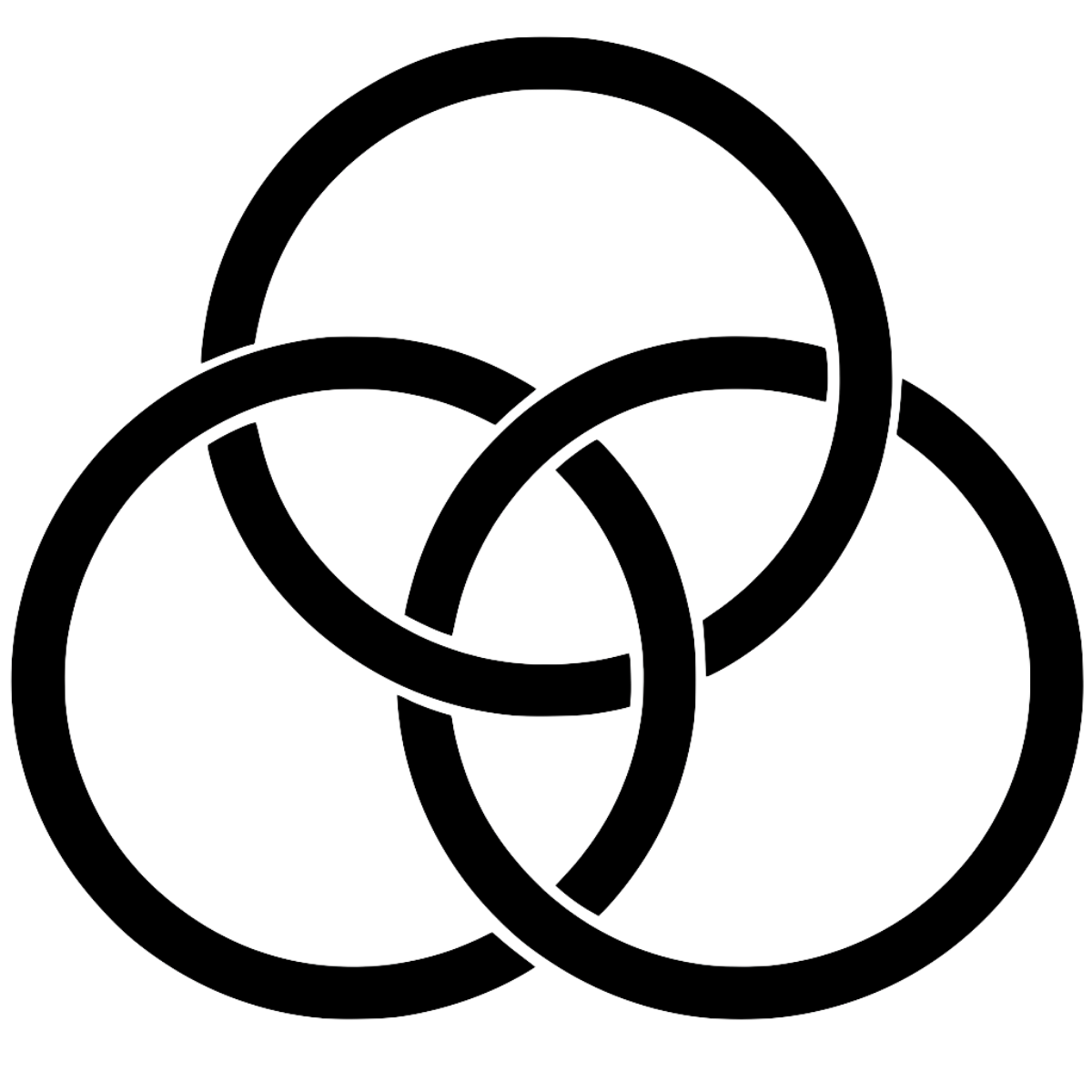
Ragland has been a leading Anglophone interpreter of Lacan’s use of topology, particularly the Borromean knot linking the Real, Symbolic, and Imaginary registers. She emphasizes that Lacan’s topological figures are not metaphors but formal devices intended to articulate the structure of the speaking subject.[2]
Her work clarifies the function of the sinthome as a fourth ring that stabilizes the subject when symbolic consistency fails. This conceptualization has been particularly significant for clinical discussions of psychosis, creativity, and singular modes of enjoyment, where the symptom functions as a structural support rather than a mere pathology.
Drive, Language, and Objet petit a
Ragland’s work repeatedly returns to the Freudian drive, which she understands as a repetitive circuit organized around loss rather than biological need. She highlights Lacan’s reconfiguration of the drive through the concept of objet petit a, the object-cause of desire that anchors repetition without satisfying it.
For Ragland, drive theory demonstrates how language both constitutes and destabilizes the subject. The subject is produced by signifiers, yet encounters an irreducible remainder—jouissance—that resists symbolization. This tension between language and the Real underlies her broader account of subjectivity and ethics.
Clinical and Institutional Work
Although Ragland is not primarily known as a training analyst within institutional psychoanalysis, her theoretical work has had substantial clinical influence. Her writings are regularly used in Lacanian clinical seminars, particularly in discussions of sexuation, topology, and the late Lacan.
As founding editor of the Journal for the Psychoanalysis of Culture and Society, Ragland played a key institutional role in shaping an Anglophone space where psychoanalysis could engage cultural, political, and aesthetic questions without abandoning clinical rigor.
Influence and Legacy
Ragland’s influence is evident in the development of Anglophone Lacanian scholarship from the late twentieth century onward. She has been a formative figure for scholars such as Joan Copjec and Sheila Kunkle, as well as for clinicians seeking theoretically rigorous engagement with Lacan’s later teaching.
Her work occupies a distinctive position between academic and clinical worlds. By insisting on conceptual precision, formalization, and fidelity to Freud and Lacan, Ragland has helped prevent the dilution of psychoanalysis into generalized theory, while simultaneously enabling its transmission across disciplinary boundaries.
Key Works
- Jacques Lacan and the Philosophy of Psychoanalysis (1989) — Introduces Lacanian theory in dialogue with Freud and philosophy, emphasizing language and sexual difference.
- Essays on the Pleasures of Death: From Freud to Lacan (1995) — Examines jouissance and the death drive across Freudian and Lacanian frameworks.
- The Logic of Sexuation: From Aristotle to Lacan (2004) — A systematic exposition of Lacan’s formulas of sexuation and their clinical implications.
- Lacan: Topologically Speaking (2011, co-edited with Sheila Kunkle) — Explores the role of topology in Lacanian theory and practice.
- Topologies of the Flesh (2015) — Develops a comprehensive account of topology, embodiment, and the sinthome in Lacan’s late teaching.