Karen Horney
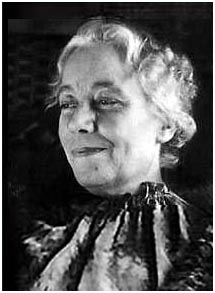
Karen Horney (born Karen Danielsen, September 16, 1885 – December 4, 1952) was a German-American psychoanalyst whose theories challenged traditional Freudian psychoanalysis, particularly its views on female psychology. She is known for her emphasis on cultural and social factors in the development of neurosis, her concept of "basic anxiety," and her focus on the individual's potential for self-realization.

- The Neurotic Personality of Our Time (1937)
- New Ways in Psychoanalysis (1939)
- Self-Analysis (1942)
- Our Inner Conflicts (1945)
- Neurosis and Human Growth (1950)
Biography
Karen Danielsen Horney was born in Blankenese, Germany, near Hamburg, to Berndt Wackels Danielsen, a Norwegian sea captain, and Clotilde van Ronzelen Danielsen, who was of Dutch origin. She had a complex relationship with her parents, feeling closer to her mother, who encouraged her intellectual pursuits.
Education and Early Career
Horney entered medical school at the University of Freiburg in 1906, later transferring to the University of Göttingen and finally to the University of Berlin, where she received her medical degree in 1911.[1] During her medical studies, she became interested in psychoanalysis and began her own analysis with Karl Abraham in 1910. She also underwent analysis with Hanns Sachs.[2]
In 1915, Horney began her psychoanalytic practice in Berlin. She became a member of the Berlin Psychoanalytic Society, where she taught and practiced psychoanalysis. During this period, she published several papers on female psychology, which already hinted at her later divergence from Freudian theory.[3]
Move to the United States
In 1932, Horney moved to the United States and became the associate director of the Chicago Institute for Psychoanalysis. She later moved to New York City, where she taught at the New School for Social Research. Her experiences in the United States, particularly her observations of American culture, further shaped her theoretical perspectives.
Institutional Affiliations and Splits
Horney's increasingly critical stance towards Freudian theory led to conflicts within the psychoanalytic community. In 1941, she was asked to resign from the New York Psychoanalytic Society due to her dissenting views. In response, she co-founded the Association for the Advancement of Psychoanalysis and the American Institute for Psychoanalysis, where she continued to develop and promote her own psychoanalytic theories.[2]
Engagement with Psychoanalysis
Horney's engagement with psychoanalysis was marked by both adherence to and departure from Freudian principles. While she initially embraced Freudian theory, she gradually developed her own distinct perspective, particularly regarding female psychology and the role of culture in shaping personality.
Critique of Freudian Theory
Horney challenged several key aspects of Freudian theory. She rejected Freud's concept of "penis envy" in women, arguing that it was based on a patriarchal view of female inferiority. Instead, she proposed the concept of "womb envy" in men, suggesting that men may experience feelings of inferiority due to their inability to bear children.[4]
Horney also criticized Freud's emphasis on instinctual drives, arguing that cultural and social factors play a more significant role in the development of neurosis. She believed that neurosis arises from disturbances in interpersonal relationships, particularly in childhood, rather than solely from unresolved Oedipal conflicts or repressed sexual desires.
Emphasis on Culture and Interpersonal Relationships
Horney emphasized the importance of cultural and social factors in shaping personality and contributing to neurosis. She argued that different cultures produce different types of neurosis, and that understanding the cultural context is essential for effective psychoanalytic treatment. She saw neurosis as a product of disturbed human relationships, particularly those experienced in childhood. These disturbances lead to feelings of basic anxiety and insecurity, which individuals attempt to cope with through various neurotic strategies.
Theoretical Contributions
Horney made several significant theoretical contributions to psychoanalysis, including the concepts of basic anxiety, neurotic needs, and the idealized self.
Basic Anxiety
Basic anxiety is a feeling of being isolated and helpless in a potentially hostile world.[5] It arises from disturbed interpersonal relationships in childhood, such as parental indifference, rejection, or overprotection. Horney believed that basic anxiety is the foundation of neurosis, as individuals develop various strategies to cope with this underlying feeling of insecurity.
Neurotic Needs
To cope with basic anxiety, individuals develop neurotic needs, which are irrational and compulsive strivings for affection, power, prestige, and other idealized goals.[6] Horney identified ten neurotic needs, including the need for affection and approval, the need for a "partner" who will take over one's life, the need to restrict one's life within narrow borders, and the need for power. These needs become neurotic when they are pursued rigidly and compulsively, regardless of the situation or the needs of others.
The Idealized Self
The idealized self is an unrealistic and grandiose image of oneself that neurotic individuals create to compensate for feelings of inadequacy and worthlessness.[7] The idealized self is based on the individual's neurotic needs and represents an attempt to deny or overcome their perceived flaws. However, the idealized self is ultimately unattainable and leads to further feelings of frustration and self-hatred.
The Real Self
In contrast to the idealized self, Horney emphasized the importance of the real self, which represents the individual's genuine potential for growth and self-realization. She believed that neurosis arises when individuals become alienated from their real self and strive to live up to the unrealistic demands of their idealized self. The goal of psychoanalytic treatment, according to Horney, is to help individuals reconnect with their real self and develop their unique potential.
Tyranny of the Shoulds
The tyranny of the shoulds refers to the inner demands and expectations that neurotic individuals impose upon themselves, based on their idealized self-image.[8] These "shoulds" represent unrealistic and often contradictory standards of perfection, such as "I should be perfect," "I should be loved by everyone," or "I should always be in control." The tyranny of the shoulds leads to feelings of guilt, shame, and self-contempt when individuals inevitably fail to meet these impossible standards.
Clinical and Institutional Work
Horney's clinical work focused on helping patients understand and overcome their neurotic patterns of behavior. She emphasized the importance of self-analysis and encouraged patients to take an active role in their own treatment. Her founding of the Association for the Advancement of Psychoanalysis and the American Institute for Psychoanalysis provided alternative training and practice settings for psychoanalysts who shared her views.
Influence and Legacy
Horney's work had a significant influence on the development of neo-Freudian psychoanalysis, humanistic psychology, and feminist theory. Her emphasis on cultural and social factors in neurosis, her critique of Freudian views on female psychology, and her focus on self-realization have all had a lasting impact on the field. Her ideas influenced prominent psychologists such as Erich Fromm, Abraham Maslow, and Carl Rogers. Her work continues to be relevant to contemporary psychoanalytic thought and practice.
Key Works
- The Neurotic Personality of Our Time (1937): This book outlines Horney's theory of neurosis, emphasizing the role of cultural and social factors in its development.
- New Ways in Psychoanalysis (1939): In this work, Horney presents her alternative approach to psychoanalysis, challenging traditional Freudian concepts.
- Self-Analysis (1942): Horney explores the process of self-analysis and provides guidance for individuals seeking to understand and overcome their neurotic patterns.
- Our Inner Conflicts (1945): This book delves into the inner conflicts that arise from the clash between the idealized self and the real self.
- Neurosis and Human Growth (1950): Horney presents her theory of self-realization and explores the conditions that promote or hinder personal growth.
See also
References
- ↑ Quinn, Susan (1987). A Mind of Her Own: The Life of Karen Horney.
- ↑ 2.0 2.1 Cite error: Invalid
<ref>tag; no text was provided for refs namedQuinn - ↑ Westkott, Marcia (1986). "The Feminist Legacy of Karen Horney". Social Research.
- ↑ Horney, Karen (1967). Feminine Psychology.
- ↑ Horney, Karen (1937). The Neurotic Personality of Our Time.
- ↑ Cite error: Invalid
<ref>tag; no text was provided for refs namedHorney1937 - ↑ Horney, Karen (1942). Self-Analysis.
- ↑ Horney, Karen (1945). Our Inner Conflicts.