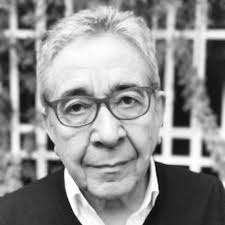
Julio Moreno

- Clinic of the Real
- Psychosis
- Social Link
- Political Psychoanalysis
- Users' Guide to Lacanian Psychoanalysis (2016)
- Key Concepts of Lacanian Psychoanalysis (2018)
Julio Moreno is an Argentinian psychoanalyst, professor, and author known for his contributions to Lacanian psychoanalysis. His work focuses on the clinic of psychosis, the concept of the Real in Lacanian theory, and the intersection of psychoanalysis with social and political issues. Moreno is recognized for his efforts to make Lacanian concepts accessible and relevant to contemporary clinical practice and theoretical debates.[1]
Biography
Julio Moreno's intellectual formation and career have been deeply rooted in the Argentinian psychoanalytic community, which has a strong tradition of Lacanian thought. He has been involved in both academic and clinical settings, contributing to the development and dissemination of Lacanian psychoanalysis in Argentina and internationally.
Education and Early Career
Moreno's early education included studies in psychology and philosophy, leading him to a deep engagement with the works of Sigmund Freud and Jacques Lacan. He pursued advanced training in psychoanalysis, becoming a practicing analyst and researcher. His early work focused on the theoretical foundations of Lacanian psychoanalysis and its application to clinical practice.[2]
Institutional Affiliations
Moreno has held various academic positions, teaching psychoanalytic theory and clinical practice at universities and psychoanalytic institutions. He has also been actively involved in psychoanalytic societies and organizations, contributing to the ongoing debates and developments within the field. His institutional affiliations have allowed him to engage with a wide range of students, clinicians, and researchers, fostering a vibrant intellectual community around Lacanian psychoanalysis.
Key Turning Points
A significant turning point in Moreno's career was his increasing focus on the clinic of psychosis within a Lacanian framework. This led him to explore the concept of the Real, one of Lacan's three registers (Real, Symbolic, and Imaginary), and its implications for understanding and treating psychotic phenomena. His work in this area has been influential in shaping contemporary Lacanian approaches to psychosis.[3] Another key development has been his engagement with the social and political dimensions of psychoanalysis, exploring how Lacanian concepts can illuminate issues of power, ideology, and social suffering.
Engagement with Psychoanalysis
Moreno's engagement with psychoanalysis is characterized by a commitment to both the theoretical rigor of Lacanian thought and its practical relevance for clinical work and social critique. He seeks to bridge the gap between abstract theoretical concepts and the concrete realities of clinical experience, making Lacanian psychoanalysis accessible to a wider audience.
Clinical Practice and Technique
As a practicing psychoanalyst, Moreno adheres to the principles of Lacanian technique, emphasizing the importance of the analyst's listening and interpretation in facilitating the analysand's exploration of their unconscious desires and conflicts. He pays particular attention to the role of language and the symbolic order in shaping psychic reality, and he utilizes Lacanian concepts such as the objet petit a and the sinthome to understand the unique structure of each analysand's subjectivity.[4]
Theoretical Reinterpretation and Critique
Moreno's theoretical work involves both reinterpreting and extending Lacanian concepts, particularly in relation to the clinic of psychosis and the social dimensions of psychoanalysis. He engages critically with other psychoanalytic traditions, highlighting the unique contributions of Lacanian thought while also acknowledging its limitations. His work seeks to refine and develop Lacanian theory in light of contemporary clinical and social challenges.
Relation to Jacques Lacan
Moreno's work is deeply rooted in the teachings of Jacques Lacan, whom he considers a major influence. He draws extensively on Lacan's concepts and clinical insights, while also engaging critically with Lacan's later work and its implications for psychoanalytic practice. Moreno's aim is to remain faithful to the spirit of Lacanian psychoanalysis while also adapting it to the changing needs of contemporary clinical and social contexts.
Theoretical Contributions
Moreno's theoretical contributions are centered around several key areas: the clinic of the Real, the understanding of psychosis, and the intersection of psychoanalysis with social and political issues.
Clinic of the Real
Moreno's work on the clinic of the Real explores the ways in which the Real, as a dimension of experience that resists symbolization and meaning, manifests in clinical settings. He argues that the Real is not simply a traumatic event or a lack in the symbolic order, but rather a fundamental dimension of human existence that must be engaged with in psychoanalytic treatment. His approach emphasizes the importance of the analyst's ability to tolerate and work with the unsymbolizable aspects of the analysand's experience.[5]
Psychosis
Moreno has made significant contributions to the Lacanian understanding of psychosis. He argues that psychosis is not simply a deficit in ego function or a regression to an earlier stage of development, but rather a unique structural configuration of the subject's relation to language, the Other, and the Real. His work emphasizes the importance of understanding the specific symbolic and imaginary mechanisms that underlie psychotic phenomena, and he advocates for a clinical approach that respects the unique logic of the psychotic subject.[6]
Social Link
Moreno's exploration of the social link within a Lacanian framework examines how psychoanalytic concepts can illuminate the dynamics of social relations, power structures, and ideological formations. He argues that the social link is not simply a matter of shared values or common interests, but rather a complex interplay of unconscious desires, identifications, and fantasies. His work in this area has implications for understanding issues such as racism, sexism, and political violence.[7]
Influence and Legacy
Julio Moreno's work has influenced a new generation of Lacanian psychoanalysts and theorists, particularly in Argentina and Latin America. His accessible writing style and his focus on the clinical and social relevance of Lacanian concepts have made his work widely read and appreciated. He has contributed to the ongoing development of Lacanian psychoanalysis, ensuring its continued relevance in the 21st century.
Key Works
- Users' Guide to Lacanian Psychoanalysis (2016): A comprehensive introduction to Lacanian psychoanalysis, designed for students, clinicians, and anyone interested in learning more about this complex and influential body of thought.
- Key Concepts of Lacanian Psychoanalysis (2018): An accessible and informative guide to the key concepts of Lacanian psychoanalysis, providing clear explanations and illustrative examples.
See also
References
- ↑ Moreno, Julio. Users' Guide to Lacanian Psychoanalysis. Karnac Books, 2016.
- ↑ Moreno, Julio. Key Concepts of Lacanian Psychoanalysis. Palgrave Macmillan, 2018.
- ↑ Fink, Bruce. The Lacanian Subject: Between Language and Jouissance. Princeton University Press, 1995.
- ↑ Lacan, Jacques. Écrits: The First Complete Edition in English. W. W. Norton & Company, 2006.
- ↑ Žižek, Slavoj. The Ticklish Subject: The Absent Centre of Political Ontology. Verso, 1999.
- ↑ Nasio, Juan-David. Five Lessons on Lacan. State University of New York Press, 1998.
- ↑ Zupančič, Alenka. The Shortest Shadow: Nietzsche's Philosophy of the Two. MIT Press, 2003.