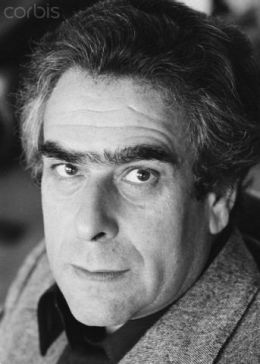
Serge Leclaire

- The Letter in the Unconscious
- Sexual Reality
- The Number 1
- The Divided Subject
- The Real
- Psychanalyser (1968)
- Démasquer le réel (1971)
- On tue un enfant (1975)
- Le Pays de l'autre (1971)
Serge Leclaire (1924-1994) was a prominent French psychoanalyst who made significant contributions to the field, particularly within the framework of Lacanian psychoanalysis. He is best known for his work on the role of language in the unconscious, his exploration of the concept of "sexual reality," and his innovative approaches to clinical practice. Leclaire's work has had a lasting impact on psychoanalytic theory and continues to be studied and debated by scholars and practitioners alike.
Biography
Serge Leclaire was born in France in 1924. He pursued studies in medicine and psychiatry before becoming involved in the psychoanalytic movement. His intellectual development was deeply influenced by his encounter with Jacques Lacan, whose seminars he attended regularly. Leclaire became a close associate of Lacan and played a significant role in the development and dissemination of Lacanian psychoanalysis.
Early Life and Education
Details regarding Leclaire's early life and education are relatively scarce. However, it is known that he trained as a physician and psychiatrist, which provided him with a foundation for his later work in psychoanalysis. His interest in the human psyche led him to explore various theoretical frameworks, including those of Sigmund Freud and other prominent psychoanalytic thinkers.
Encounter with Lacan and Institutional Affiliations
Leclaire's encounter with Jacques Lacan proved to be a pivotal moment in his intellectual and professional development. He became deeply engaged with Lacan's ideas and actively participated in the Lacanian psychoanalytic movement. Leclaire was a member of the École Freudienne de Paris (EFP), founded by Lacan, and played a significant role in its activities. He later became involved in the dissolution of the EFP and the formation of new psychoanalytic organizations. The precise details of his institutional affiliations following the dissolution of the EFP require further research.
Key Turning Points
One of the key turning points in Leclaire's career was the publication of his influential essay, "Psychoanalyzing" ("Psychanalyser"), in 1968. This essay, which explored the role of language and the signifier in the unconscious, established Leclaire as a major figure in Lacanian psychoanalysis. Other significant moments include the publication of his books, Démasquer le réel (1971), On tue un enfant (1975), and Le Pays de l'autre (1971), which further elaborated his theoretical and clinical contributions.
Engagement with Psychoanalysis
Leclaire's engagement with psychoanalysis was characterized by a deep commitment to the ideas of Jacques Lacan, while also developing his own unique contributions to the field. He sought to extend and refine Lacanian concepts, particularly in the areas of language, the unconscious, and the development of the subject.
Relation to Lacan
Leclaire's relationship with Lacan was one of close collaboration and intellectual exchange. He was deeply influenced by Lacan's structuralist approach to psychoanalysis and his emphasis on the role of language in the formation of the unconscious. However, Leclaire also developed his own distinctive perspective, particularly in his exploration of the concept of "sexual reality" and his innovative approaches to clinical practice.
Theoretical Contributions
Leclaire made several significant theoretical contributions to psychoanalysis, including his work on the letter in the unconscious, his exploration of the concept of "sexual reality," and his analysis of the number 1 as a fundamental element of psychic structure. These contributions have had a lasting impact on Lacanian psychoanalysis and continue to be studied and debated by scholars and practitioners.
Theoretical Contributions
Leclaire's theoretical contributions are notable for their originality and their impact on Lacanian psychoanalysis. He developed and extended Lacanian concepts, particularly in the areas of language, the unconscious, and the development of the subject.
The Letter in the Unconscious
Leclaire's work on the letter in the unconscious is one of his most significant contributions to psychoanalytic theory. Drawing on Lacan's concept of the unconscious as structured like a language, Leclaire argued that the letter, as a material signifier, plays a crucial role in the formation of the unconscious. He explored the ways in which letters can become invested with psychic significance and how they can function as organizing principles for unconscious processes.[1]
Sexual Reality
Leclaire introduced the concept of "sexual reality" to describe the fundamental lack or absence that underlies human sexuality. He argued that sexual reality is not a fixed or predetermined entity but rather a construction that emerges through the interplay of language, desire, and the unconscious. This concept has been influential in psychoanalytic debates about the nature of sexuality and its relationship to the symbolic order.[2]
The Number 1
Leclaire explored the significance of the number 1 as a fundamental element of psychic structure. He argued that the number 1 represents the phallus as a signifier of lack and that it plays a crucial role in the formation of the ego and the development of sexual identity. His analysis of the number 1 has been influential in psychoanalytic discussions of the phallus and its symbolic function.[3]
Clinical and Institutional Work
Leclaire was a practicing psychoanalyst and made significant contributions to clinical practice. He developed innovative approaches to the treatment of psychosis and childhood neurosis, drawing on his theoretical insights into the role of language and the unconscious. He also played a role in the transmission of psychoanalysis, both through his teaching and his involvement in psychoanalytic organizations. The precise details of his clinical practice and institutional work require further research.
Influence and Legacy
Serge Leclaire's work has had a lasting impact on psychoanalysis, particularly within the Lacanian tradition. His theoretical contributions have been influential in shaping psychoanalytic thought, and his clinical innovations have informed psychoanalytic practice. His work continues to be studied and debated by scholars and practitioners, and his legacy as a major figure in psychoanalysis is secure.
Key Works
- Psychanalyser (1968): This influential essay explores the role of language and the signifier in the unconscious, establishing Leclaire as a major figure in Lacanian psychoanalysis.
- Démasquer le réel (1971): This book elaborates Leclaire's concept of "sexual reality" and its implications for psychoanalytic theory and practice.
- On tue un enfant (1975): This work explores the symbolic significance of the child in the unconscious and its relationship to desire and the Oedipus complex.
- Le Pays de l'autre (1971): Explores the concept of otherness and its role in the formation of the subject.