Portal: Research & Theory
| 📚 Research & Theory Portal |
|
For scholars, researchers, and advanced students of Lacanian psychoanalysis |
Lacan's Seminars: Complete Archive
The seminars represent Lacan's primary teaching for over 25 years. Essential reading for serious engagement with Lacanian theory.
Early Seminars (1953-1960)
|
|
Middle Period (1964-1971)
- Seminar XI — The Four Fundamental Concepts of Psychoanalysis (1964)
- **START HERE for advanced theory**
- Unconscious • Drive • Repetition • Transference
- Gaze and voice
- Most accessible of the later seminars
- Seminar XII — Crucial Problems for Psychoanalysis (1964-65)
- Subject of the unconscious
- Suture
- Seminar XIII — The Object of Psychoanalysis (1965-66)
- Object a formalized
- Topology advanced
- Seminar XIV — Logic of Fantasy (1966-67)
- Fantasy formula: $ ◊ a
- Logical time
- Seminar XV — Psychoanalytic Act (1967-68)
- The act and passage
- Institutional questions
- Seminar XVI — From an Other to the other (1968-69)
- Loss and surplus
- Plus-de-jouir
- Seminar XVII — The Other Side of Psychoanalysis (1969-70)
- **Four discourses** introduced
- Social bond theory
- Master's discourse to analyst's discourse
- **Essential for social/political applications**
Late Seminars (1971-1980)
- Seminar XVIII — On a Discourse That Might Not Be a Semblance (1971)
- Truth and semblance
- Written and spoken
- Seminar XIX — ...Or Worse (1971-72)
- Love and knowledge
- Sexuation begins
- Seminar XX — Encore (1972-73)
- **Formulas of sexuation**
- Other jouissance
- Feminine jouissance
- "There is no sexual relation"
- **Essential reading**
- Seminar XXI — Les non-dupes errent (1973-74)
- Topology and knots
- Naming and the father
- Seminar XXII — R.S.I. (1974-75)
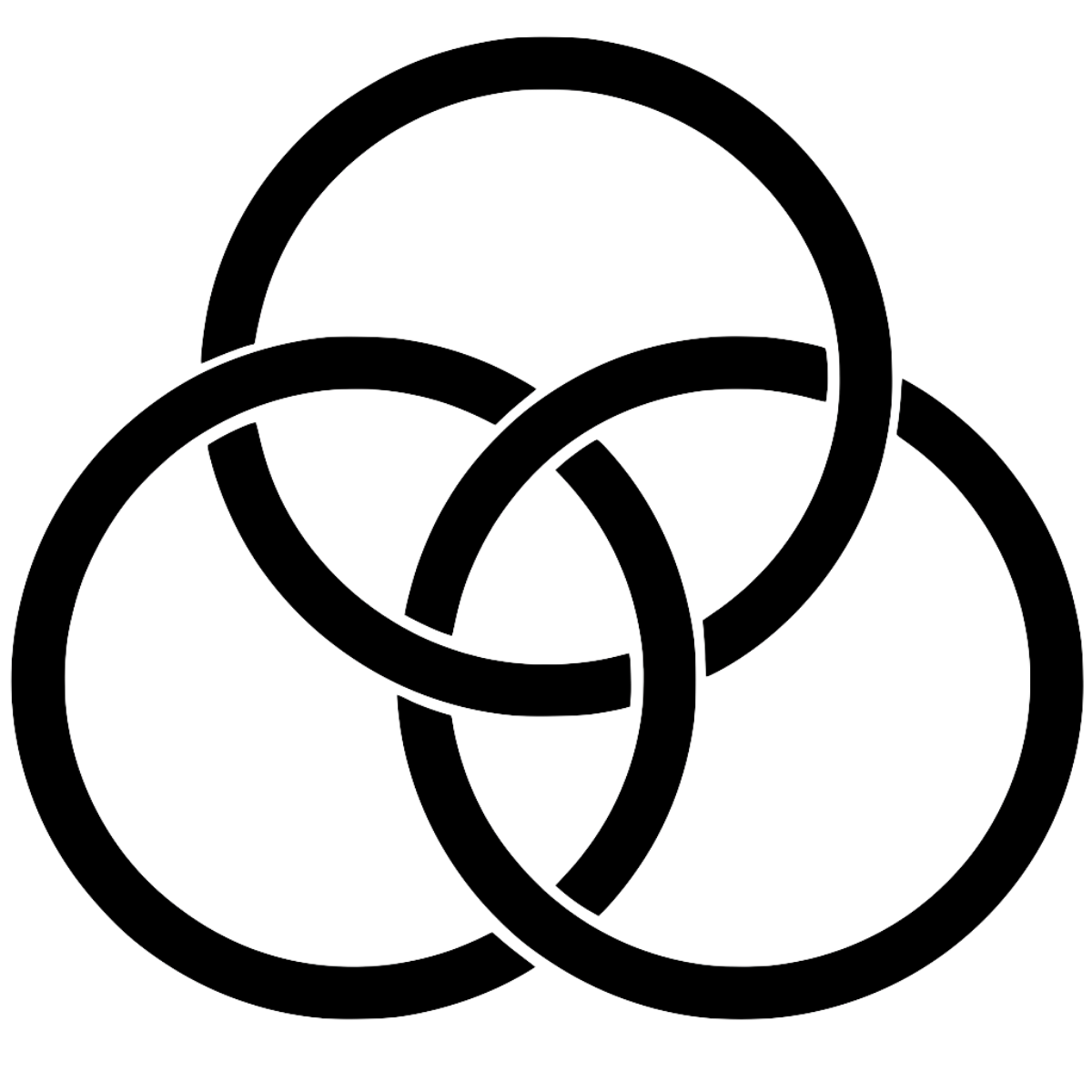
- Borromean knot developed
- The three registers
- Seminar XXIII — Le sinthome (1975-76)
- Joyce and the sinthome
- Fourth ring
- Beyond symptom
- Seminar XXIV — L'insu que sait de l'une-bévue s'aile à mourre (1976-77)
- Lalangue
- The unconscious and speech
- Seminar XXV — Le moment de conclure (1977-78)
- Topology continues
- Seminar XXVI — La topologie et le temps (1978-79)
- Time and space
Suggested Reading Order
For researchers new to Lacan's seminars:
- Seminar XI — Most systematic, accessible entry point
- Seminar VII — Ethics and Thing, foundational concepts
- Seminar XX — Sexuation and jouissance
- Seminar XVII — Four discourses, social applications
- Seminar X — Anxiety and object a
- Seminar I — Return to beginning with new understanding
Then explore based on your research interests.
Essential Texts from Écrits
Lacan's collected writings in Écrits (1966):
Core Theoretical Papers
- The Mirror Stage (1949) — Foundation of imaginary
- The Function and Field of Speech and Language (1953) — Lacan's Rome Discourse, programmatic statement
- The Agency of the Letter (1957) — Structuralist linguistics applied to unconscious
- The Subversion of the Subject and the Dialectic of Desire (1960) — Graph of desire, mature theory
- The Signification of the Phallus (1958) — Phallus as signifier
- Position of the Unconscious (1964) — Alienation and separation
Clinical Papers
- The Direction of the Treatment (1958) — Clinical orientation, essential for practitioners
- Remarks on Daniel Lagache's Presentation (1960) — Transference and desire
- Presentation on Psychical Causality (1946) — Early theoretical position
Case Studies
- On a Question Prior to Any Possible Treatment of Psychosis (1958) — Schreber case, foreclosure
- The Youth of Gide (1958) — Desire and identification
Theoretical Frameworks
The Three Registers
Master Lacan's fundamental framework:
- Symbolic — Language, law, the big Other
- Imaginary — Image, identification, ego
- Real — That which resists symbolization
- RSI — The knotting of the three
- Borromean knot — Topological model
- Sinthome — Fourth ring, supplement
Four Discourses
Lacan's social bond theory:
| Discourse | Agent | Other | Production | Truth |
|---|---|---|---|---|
| Master | S1 | S2 | a | $ |
| University | S2 | a | $ | S1 |
| Hysteric | $ | S1 | S2 | a |
| Analyst | a | $ | S1 | S2 |
- Capitalism and discourse — The capitalist discourse
- Social bond — Discourse as social link
Mathemes & Formalization
- Matheme — Formalization in psychoanalysis
- Graph of desire — Mapping desire and demand
- L-schema — Imaginary and symbolic axes
- Schema R — Neurotic structure
- Schema I — Psychotic structure
- Formulas of sexuation — Masculine and feminine positions
- Formula of fantasy — $ ◊ a
Topology
- Topology — Why topology for psychoanalysis?
- Moebius strip — Inside/outside, subject/object
- Torus — Demand and desire
- Cross-cap — Projective plane
- Klein bottle — Non-orientable surface
- Borromean rings — Three register knotting
Key Concepts for Research
Language & Structure
- Signifier and Signified
- Master signifier (S1)
- Battery of signifiers (S2)
- Chain of signifiers
- Quilting point (point de capiton)
- Metaphor and Metonymy
- Lalangue — Beyond language
Subject & Otherness
- Subject — Barred subject ($)
- Ego vs. Subject
- Other (Autre) — Big Other
- Other jouissance
- Subject supposed to know
- Alienation and Separation
Desire, Drive & Jouissance
- Desire — Desire of the Other
- Drive — Partial drives
- Libido — Organ of libido
- Jouissance — Beyond pleasure
- Plus-de-jouir — Surplus enjoyment
- Objet petit a — Object-cause
- Gaze and Voice — Objects
Clinical Structures
- Neurosis — Repression
- Psychosis — Foreclosure
- Perversion — Disavowal
- Sinthome — Beyond symptom
Research Methods
Close Reading Lacan
- Study seminars in original French when possible
- Multiple translations comparison
- Cross-reference concepts across seminars
- Track concept development over time
- Attend to Lacan's linguistic play
Contextualization
- Structuralist linguistics — Saussure, Jakobson
- Philosophy — Hegel, Heidegger, Sartre
- Psychoanalysis — Freud, Klein, Anna Freud
- Anthropology — Lévi-Strauss
- Mathematics — Topology, set theory
Secondary Literature
- Jacques-Alain Miller's courses
- Bruce Fink's introductions
- Dylan Evans' dictionary
- Slavoj Žižek's applications
- Joan Copjec's theory
Current Research Areas
- Neuroscience and psychoanalysis
- Digital culture and subjectivity
- Political applications of Lacan
- Gender and queer theory
- Art and aesthetics
- Film and media studies
- Critical theory
- Philosophy of language
Academic Resources
Journals
- Psychoanalytic Quarterly
- International Journal of Psychoanalysis
- Lacanian Ink
- Analysis
- Journal for Lacanian Studies
- Umbr(a)
Organizations
- World Association of Psychoanalysis (WAP)
- European School of Psychoanalysis
- Association of Lacanian Psychoanalysis
- National psychological associations
Conferences
- Annual Lacan conferences
- WAP Congress
- Association conferences
- University symposia
Online Resources
Bibliography
Primary Sources
- Lacan, J. (2006). Écrits: The First Complete Edition in English
- Lacan, J. (various). The Seminar of Jacques Lacan (Books I-XXIII)
- Lacan, J. (2019). ...or Worse: The Seminar of Jacques Lacan, Book XIX
- Lacan, J. (various). Television and other interviews
Essential Secondary
- Fink, B. (1995). The Lacanian Subject
- Fink, B. (1997). A Clinical Introduction to Lacanian Psychoanalysis
- Žižek, S. (various works)
- Miller, J.-A. (various courses)
- Evans, D. (1996). An Introductory Dictionary of Lacanian Psychoanalysis
- Copjec, J. (1994). Read My Desire
- Chiesa, L. (2007). Subjectivity and Otherness
Advanced Theory
- Badiou, A. (2009). Theory of the Subject
- Roudinesco, E. (1997). Jacques Lacan
- Julien, P. (1994). Jacques Lacan's Return to Freud
- Verhaeghe, P. (2004). On Being Normal and Other Disorders
Research Tools
- Search Engine — Advanced search
- All Articles — Browse alphabetically
- Categories — Concepts • Clinical • Theory
- Recent Scholarship — Recent updates
- Citations — What links here for any article
Discussion & Community
- Talk Pages — Discuss articles and concepts
- WikiProject Psychoanalysis — Collaborative improvement
- Peer Review — Get feedback on contributions
- Translations — Help translate Lacan texts
Contributing to Research
How to contribute as a researcher:
- Edit articles — Improve theoretical accuracy
- Add citations — Link to primary sources
- Translate passages — Share French-to-English translations
- Write summaries — Make concepts accessible
- Connect concepts — Add links and cross-references
- Upload resources — PDFs, diagrams, charts (with permissions)
---